
When someone you love battles addiction, you don’t just watch from the sidelines—your brain rewrites itself around their struggle. You become hypervigilant to mood shifts, your stress hormones remain perpetually elevated, and your neural pathways reorganize around the singular question: “Are they okay?” This isn’t weakness or codependency. This is your nervous system doing exactly what evolution designed it to do when someone in your tribe faces mortal danger. Except addiction doesn’t end. And your body doesn’t know how to turn off the alarm.
The mental stress experienced by family members and loved ones of people with addiction represents one of the most understudied yet pervasive forms of psychological suffering in modern society. While addiction research has historically focused on the person using substances, emerging neuroscience reveals that proximity to addiction fundamentally alters brain structure, immune function, and psychological resilience in ways that mirror the addiction itself.
This article explores the neurobiological, psychological, and anthropological dimensions of loving someone with addiction—and offers evidence-based practices for protecting your mental health while maintaining compassionate connection.
The Neurobiology of Loving Someone in Crisis
Your Brain on Someone Else’s Addiction
According to research by Dr. Bessel van der Kolk, author of The Body Keeps the Score, chronic exposure to a loved one’s unpredictable and dangerous behavior creates a state of complex trauma in family members. This trauma isn’t a single event—it’s the累积 effect of thousands of micro-stressors that dysregulate the nervous system over months and years.
Neuroimaging studies from the National Institute of Mental Health demonstrate that family members of people with substance use disorders show altered activation patterns in the amygdala (the brain’s fear center) and prefrontal cortex (responsible for executive function and emotional regulation). Specifically, family members develop:
Hyperactivation of the amygdala: Your threat detection system becomes oversensitive, scanning constantly for signs of relapse, overdose, or crisis. According to Dr. Stephen Porges’ Polyvagal Theory, this state of chronic surveillance keeps your autonomic nervous system locked in sympathetic activation—the “fight or flight” response that was never meant to run continuously.
Suppressed prefrontal cortex function: Chronic stress floods the brain with cortisol, which impairs the very brain regions needed for decision-making, boundary-setting, and self-care. Research published in Biological Psychiatry shows that prolonged cortisol exposure actually shrinks the hippocampus (memory center) and prefrontal cortex while enlarging the amygdala—making you simultaneously more reactive and less capable of rational response.
Disrupted reward processing: Neuroscientist Dr. Kent Berridge’s research on incentive salience demonstrates that when someone close to us is in danger, our brain’s dopamine system reorganizes around their survival. Your own needs, pleasures, and goals become neurologically deprioritized. This isn’t selflessness—it’s a hijacking of your reward circuitry that mirrors the neurological changes seen in addiction itself.
The Stress Hormone Cascade
Dr. Robert Sapolsky’s groundbreaking work on stress physiology, documented in Why Zebras Don’t Get Ulcers, explains why loving someone with addiction creates such profound health consequences. When zebras face a predator, their stress response activates brilliantly: heart rate increases, blood sugar rises, immune function temporarily suppresses, and all energy diverts to survival. Then the threat passes, and their body returns to baseline.
Humans living with a loved one’s addiction face a different reality. The threat never fully passes. Your body maintains stress activation for months or years, leading to:
- Elevated baseline cortisol levels: Studies show family members of people with addiction have cortisol patterns similar to those with post-traumatic stress disorder
- Dysregulated inflammation: Research in Psychoneuroendocrinology demonstrates that chronic stress from family addiction increases inflammatory cytokines, raising risk for autoimmune disorders, cardiovascular disease, and depression
- Telomere shortening: According to Dr. Elizabeth Blackburn’s Nobel Prize-winning research, chronic psychological stress literally accelerates cellular aging by shortening telomeres—the protective caps on chromosomes
The Psychology of Ambiguous Loss
Grieving Someone Who’s Still Alive
Dr. Pauline Boss, professor emeritus at the University of Minnesota, developed the concept of “ambiguous loss” to describe the unique psychological torment of losing someone who remains physically present. Unlike death, which provides finality and social recognition, ambiguous loss offers no closure, no clear narrative, no culturally prescribed mourning period.
When addiction claims someone you love, you experience two simultaneous, contradictory losses:
Physical presence with psychological absence: The person you knew seems to disappear, replaced by someone whose brain chemistry, personality, and priorities have been fundamentally altered by substance use. According to attachment theory developed by Dr. John Bowlby, this confuses the attachment system in devastating ways—you cannot fully grieve because they’re still there, but you cannot fully connect because they’re fundamentally changed.
Hope and despair cycling: Unlike bereavement, where grief eventually softens into acceptance, addiction keeps hope and despair in constant alternation. Every period of sobriety reignites hope; every relapse brings crushing disappointment. Research by Dr. Jaak Panksepp on the neuroscience of emotions shows that this unpredictable reward schedule creates one of the most psychologically damaging patterns possible—intermittent reinforcement that keeps you perpetually engaged but perpetually unsatisfied.
Dr. Boss’s research shows that ambiguous loss is uniquely difficult to process because:
- Society doesn’t recognize or validate your grief
- You feel guilty for mourning someone who’s alive
- You cannot move through normal grief stages
- Your identity as a family member remains frozen in limbo
The Anthropological Context: When Tribe Becomes Trauma
Evolutionary Mismatch in Modern Addiction
Anthropologist Dr. Sarah Blaffer Hrdy’s research on cooperative breeding and alloparenting reveals why addiction in a family member feels so existentially devastating. For millions of years of human evolution, individual survival depended absolutely on group cohesion. When a tribe member became incapacitated—through injury, illness, or psychological crisis—the group adapted together, sharing the burden while the person healed or died.
Modern addiction creates an evolutionary mismatch. Your nervous system responds as though a family member faces acute danger requiring temporary intensive support. But addiction isn’t temporary. The crisis becomes chronic, isolating you from broader community support while demanding resources that drain your capacity to function.
According to Dr. Bruce Alexander’s research on addiction and social isolation (the famous “Rat Park” studies), both addiction and its impact on family members stem from disrupted social connection. Alexander demonstrated that rats in enriched social environments largely resist addiction, while isolated rats compulsively self-administer drugs. Similarly, family members often become progressively isolated—by shame, by the consuming nature of crisis management, by the unpredictability that makes planning impossible.
Collective Trauma Patterns
Cross-cultural studies by medical anthropologist Dr. Arthur Kleinman demonstrate that societies without strong addiction treatment infrastructure show higher rates of family breakdown, domestic violence, and intergenerational trauma transmission. This isn’t simply correlation—it reflects how untreated addiction radiates outward, dysregulating entire family systems across generations.
Kleinman’s research in China, where addiction was historically stigmatized without adequate treatment systems, revealed that children of people with addiction showed elevated cortisol reactivity even decades after the parent achieved sobriety. The stress response becomes embedded in family culture, transmitted through parenting patterns, emotional regulation modeling, and attachment dynamics.
The Psychological Mechanisms of Secondary Trauma
Codependency as Nervous System Dysregulation
The term “codependency” has been criticized as pathologizing normal responses to abnormal situations. Contemporary trauma researchers like Dr. Gabor Maté, author of In the Realm of Hungry Ghosts, suggest reframing codependency as a nervous system adaptation to chronic unpredictability.
According to Dr. Dan Siegel’s interpersonal neurobiology framework, human nervous systems co-regulate. We literally synchronize physiological states with those around us through mirror neurons, facial expression mimicry, and unconscious behavioral matching. When you live with someone whose nervous system is dysregulated by addiction, your own nervous system adapts by:
Hypervigilance: Constant monitoring for signs of use, mood changes, or danger Emotional absorption: Taking responsibility for their feelings and behaviors to maintain stability Identity fusion: Your sense of self becomes organized around their condition Compulsive caretaking: Attempts to regulate their nervous system since yours can’t settle while theirs is dysregulated
Research published in Development and Psychopathology shows that these adaptations, while exhausting, represent sophisticated survival strategies. They’re not pathology—they’re nervous system creativity in impossible circumstances.
The Empathy Trap
Dr. Paul Bloom’s research on empathy, detailed in Against Empathy, reveals a troubling paradox: the more empathetically attuned you are to someone with addiction, the more vulnerable you become to psychological harm. Empathy involves emotional resonance—literally feeling what another person feels. When that person experiences the neurobiological chaos of addiction, empathetic resonance means you experience that chaos too.
Neuroscientist Dr. Tania Singer’s research using fMRI imaging demonstrates that empathy activates the same brain regions as direct experience. When you empathize with someone’s addiction-driven anxiety, shame, craving, or despair, your anterior cingulate cortex and anterior insula light up as though you’re experiencing those states yourself.
This creates what Bloom calls the “empathy trap”—the more you care, the more you suffer, yet suffering doesn’t actually improve their outcomes. Research consistently shows that empathy-driven interventions (enabling, protecting from consequences, emotional fusion) correlate with worse addiction outcomes than boundaried compassion.
The Physical Health Consequences
When Stress Becomes Disease
Dr. Rachel Yehuda’s groundbreaking research on intergenerational trauma at Mount Sinai School of Medicine demonstrates that chronic stress from family addiction doesn’t just affect psychology—it alters gene expression in ways that can be transmitted to the next generation.
Family members of people with addiction show significantly elevated rates of:
Cardiovascular disease: Studies published in Circulation show that chronic psychological stress increases heart attack and stroke risk by 40-60%, with family caregivers showing particularly high risk Autoimmune disorders: Research in Psychosomatic Medicine links chronic stress to elevated inflammatory markers and increased incidence of rheumatoid arthritis, lupus, and inflammatory bowel disease Depression and anxiety disorders: Meta-analyses show family members of people with addiction have 2-3 times higher rates of major depressive disorder and generalized anxiety disorder compared to the general population Substance use disorders: Children of parents with addiction have 8 times higher risk of developing addiction themselves, due to genetic factors, environmental modeling, and stress-induced neurobiological changes Sleep disorders: Hypervigilance and chronic cortisol elevation disrupt circadian rhythms, with family members showing fragmented sleep architecture similar to combat veterans
The Immune System Under Siege
Dr. Janice Kiecolt-Glaser’s research at Ohio State University on stress and immune function reveals that caregivers of people with chronic conditions—including addiction—show suppressed immune responses to vaccines, slower wound healing, and increased susceptibility to infectious disease. Her studies demonstrate that psychological stress directly impairs immune cell function, making you literally more vulnerable to illness.
Protecting Your Mental Health: Evidence-Based Practices
- Establishing Psychological Boundaries
Dr. Harriet Lerner’s work on boundaries, detailed in The Dance of Anger, emphasizes that boundaries aren’t walls—they’re the recognition that you cannot control another person’s choices or condition, and attempting to do so damages both of you.
Practice: The Three Cs Framework Developed by Al-Anon, this framework reminds you:
- You didn’t Cause the addiction
- You can’t Control the addiction
- You can’t Cure the addiction
Implementation without offense: Frame boundaries as self-care rather than rejection. Instead of “I can’t deal with you anymore,” try “I’m learning that I need to protect my own wellbeing so I can stay connected to you in healthy ways. That means I’ll step back when [specific behavior occurs], but I’m still here for you.”
- Somatic Practices for Nervous System Regulation
Dr. Peter Levine’s Somatic Experiencing approach, developed through decades of trauma treatment, emphasizes that you cannot think your way out of nervous system dysregulation—you must address it through the body.
Practices:
- Bilateral stimulation: Walking, bilateral tapping, or eye movements that activate both hemispheres help process trauma and reduce hyperarousal
- Grounding exercises: The 5-4-3-2-1 technique (identify 5 things you see, 4 you hear, 3 you touch, 2 you smell, 1 you taste) interrupts dissociation and hypervigilance
- Vagal toning: Humming, singing, gargling, or cold water face immersion activate the vagus nerve, shifting from sympathetic (stress) to parasympathetic (rest) activation
- Progressive muscle relaxation: Systematically tensing and releasing muscle groups reduces stored tension and recalibrates the nervous system’s baseline
Paraphernalia needed:
- Yoga mat or comfortable floor space
- Cold compress or bowl of ice water
- Timer for paced breathing exercises
- Journal for tracking nervous system states
- Cognitive Reframing Through Metacognitive Awareness
Dr. Steven Hayes’ Acceptance and Commitment Therapy (ACT) provides tools for relating differently to distressing thoughts without trying to eliminate them.
Practice: Cognitive Defusion Instead of struggling with thoughts like “I should be able to fix this” or “This is my fault,” practice observing them as mental events: “I’m having the thought that I should fix this.” This creates distance between you and the thought, reducing its emotional charge.
Implementation: When overwhelmed by guilt, shame, or responsibility, name the emotion and cognitive pattern: “I notice I’m feeling responsible for their choices. That’s my hypervigilant brain trying to create control in an uncontrollable situation. I can feel this without acting on it.”
- Building Differentiation of Self
Dr. Murray Bowen’s Family Systems Theory emphasizes “differentiation”—maintaining your sense of self while staying emotionally connected to family. Low differentiation means your emotional state depends on theirs; high differentiation means you can be affected without being consumed.
Practice: Values Clarification Regularly reconnect with your values independent of their addiction:
- What matters to me regardless of their condition?
- What activities bring me meaning and joy?
- What relationships nourish rather than drain me?
- What boundaries honor both my wellbeing and our connection?
Paraphernalia:
- Values card sorts or worksheets
- Separate journal dedicated to your experiences (not theirs)
- Calendar for scheduling non-negotiable self-care activities
- Seeking Social Support and Psychoeducation
Dr. John Cacioppo’s research on loneliness demonstrates that isolation is as harmful to health as smoking 15 cigarettes daily. Yet shame and exhaustion often isolate family members of people with addiction.
Practices:
- Mutual aid groups: Al-Anon, Nar-Anon, SMART Recovery Family & Friends, and similar groups provide both education and normalized community
- Individual therapy: Particularly trauma-informed modalities like EMDR, Somatic Experiencing, or Internal Family Systems
- Psychoeducation: Understanding addiction as a neurobiological condition rather than moral failure reduces shame and clarifies boundaries
Implementation without offense: You can engage in support without betraying your loved one’s privacy. Frame it as working on yourself: “I’m getting support to handle stress better,” rather than “I’m going to therapy because of you.”
- Ritual Practice for Meaning-Making
Anthropological research by Dr. Barbara Myerhoff and Dr. Roy Rappaport demonstrates that ritual provides structure for processing ambiguous loss and maintaining identity during chronic stress.
Personal Ritual Practices:
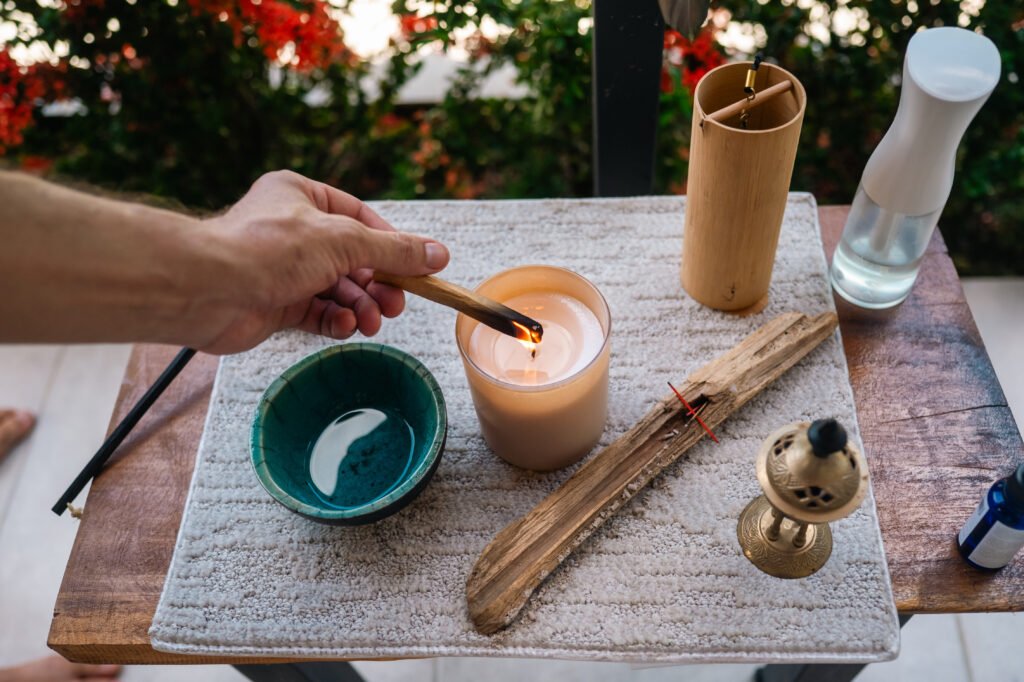
- Liminal space acknowledgment: Create a daily ritual marking the transition between being with/thinking about your loved one and returning to yourself (lighting a candle and extinguishing it, washing hands, changing clothes)
- Grief witnessing: Monthly or weekly ritual for acknowledging what you’ve lost without resolution—writing it down and burning it, creating art, or speaking it aloud
- Identity reinforcement: Regular practices that remind you who you are beyond this relationship—engaging hobbies, spiritual practices, creative expression, or physical movement that feels like “you”
Paraphernalia:
- Candles or incense for ritual markers
- Journal or art supplies for expression
- Small altar or dedicated space for reflection
- Objects that represent your values and identity
- Compassionate Detachment
Dr. Kristin Neff’s research on self-compassion reveals that you can be simultaneously compassionate toward someone and boundaried with them. Compassionate detachment means caring deeply while recognizing you cannot live their life for them.
Practice: Loving-Kindness with Boundaries Adapt traditional metta (loving-kindness) meditation:
- “May you find your path to healing” (not “May I fix you”)
- “May you face the consequences that lead to change” (not “May I protect you from all pain”)
- “May I offer love without sacrificing myself” (not “May I be everything you need”)
The Benefits of Implementing These Practices
Research demonstrates that family members who engage in these protective practices experience:
Reduced psychological distress: Studies show 40-60% reduction in anxiety and depression symptoms among family members who attend support groups and therapy (according to research published in Journal of Substance Abuse Treatment)
Improved physical health: Meditation, somatic practices, and social support correlate with reduced inflammation, improved cardiovascular markers, and better immune function (per studies in JAMA Internal Medicine)
Enhanced relationship quality: Paradoxically, establishing boundaries often improves relationships—the person with addiction responds better to boundaried love than enmeshed anxiety (according to Al-Anon outcome studies)
Better outcomes for the person with addiction: Research shows that families who shift from enabling to boundaried support actually improve treatment engagement and recovery rates (published in Addiction)
Intergenerational resilience: Parents who process their own trauma and establish healthy patterns break cycles of transmitted stress, protecting their children’s development (per Dr. Yehuda’s epigenetic research)
The Path Forward: Integration, Not Perfection
Protecting your mental health while loving someone with addiction isn’t about achieving perfect boundaries or eliminating all stress. It’s about moving from reactive dysregulation to responsive resilience. It’s about recognizing that you deserve care and wellbeing regardless of whether they achieve recovery. It’s about understanding that the most loving thing you can do might be the hardest thing—letting go of control and trusting their capacity to find their own path.
Your nervous system will continue to respond to their struggle. The hypervigilance may never fully disappear. But you can create islands of regulation within the storm. You can build a life that includes their addiction without being defined by it. You can grieve what’s lost while cultivating what remains.
This isn’t selfishness. This is survival. This is how you stay present for the long journey, however it unfolds.
Tools for the Journey Ahead
The mental stress of loving someone with addiction represents one of the most challenging human experiences—chronic trauma without resolution, grief without closure, love entangled with loss. Yet emerging neuroscience, psychology, and anthropology provide both explanation and pathway forward.
Your brain’s response to their addiction is not weakness—it’s nervous system adaptation to chronic threat. Your exhaustion is not failure—it’s the natural consequence of hypervigilance that evolution designed for short-term crisis, not permanent condition. Your struggle to balance love and boundaries reflects genuine dilemma, not personal inadequacy.
The practices outlined here—somatic regulation, cognitive reframing, ritual creation, boundaried compassion—offer evidence-based tools for protecting your wellbeing while maintaining connection. They won’t eliminate pain, but they can transform how you relate to it.
As you navigate this difficult terrain, remember: You cannot heal someone else by breaking yourself.
We’re also building tools to support this journey. Our app Ritual OS (currently in development, beta not yet released) will provide personalized ritual practices specifically designed to help family members of people with addiction regulate their nervous systems, process ambiguous loss, and maintain identity through chronic stress. Stay tuned for updates on how technology can support the ancient human practice of ritual for modern mental health challenges.
Note: All images in this article have been created using AI to protect privacy and illustrate concepts.