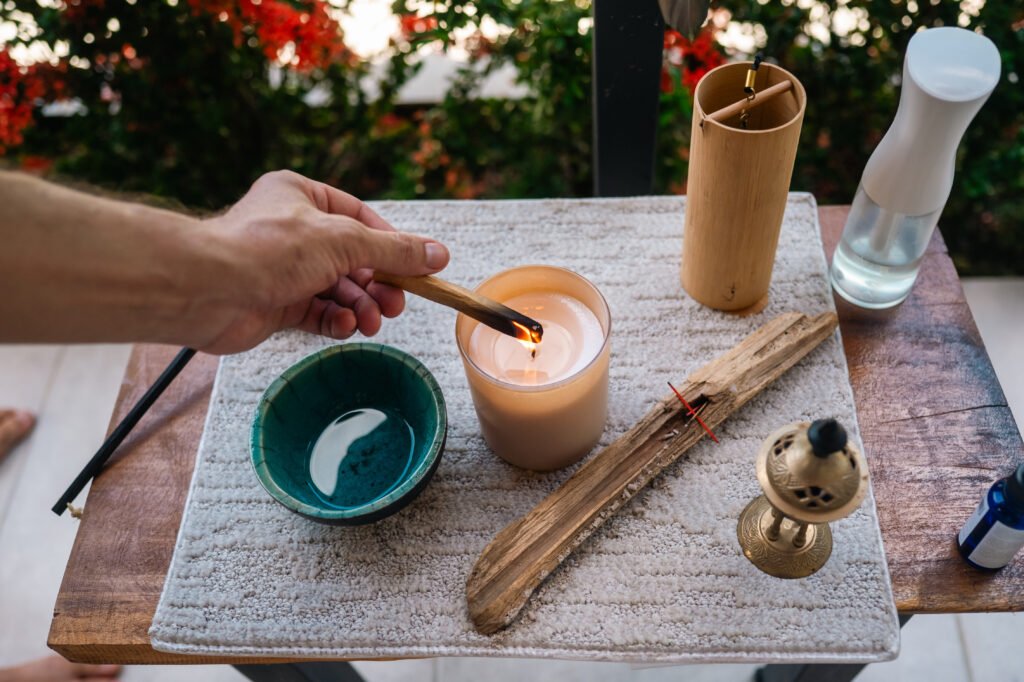

In an age of spiritual seeking and mental health awareness, millions of people find themselves drawn to the wisdom traditions of cultures beyond their own. A restless attorney in Boston discovers meditation through Tibetan Buddhism. A stressed teacher in Mumbai explores Native American smudging ceremonies. A burnt-out programmer in Berlin finds solace in Japanese tea rituals. The question inevitably arises: should you convert to these traditions to authentically practice them, or can you ethically and effectively adopt specific rituals while remaining rooted in your own cultural identity?
The emerging answer from anthropology, psychology, and neuroscience suggests something counterintuitive: selectively adopting cross-cultural rituals without full religious conversion may actually be smarter, more sustainable, and potentially more beneficial for mental health than wholesale identity transformation. This isn’t about cultural appropriation or superficial spirituality tourism—it’s about understanding how rituals work at the neurological level, respecting cultural contexts while acknowledging human universals, and building a personalized mental health toolkit that honors both heritage and innovation.
The Modern Mental Health Crisis and the Ritual Deficit
Contemporary life, particularly in urbanized and digitally saturated environments, suffers from what anthropologists increasingly recognize as a “ritual deficit.” Traditional societies embedded daily life within thick webs of ritual practice—morning prayers, seasonal ceremonies, life transition rites, communal celebrations tied to agricultural cycles. These rituals provided psychological anchoring, social cohesion, stress regulation, and existential meaning without requiring conscious effort.
Modernization has systematically dismantled these ritual structures. The result isn’t freedom but often disorientation. Mental health statistics reflect this unmooring: anxiety disorders affect approximately 284 million people globally, depression impacts over 264 million, and stress-related conditions continue rising across developed nations. While biological, economic, and social factors all contribute, the loss of regular ritual practice represents an underappreciated dimension of modern psychological distress.
Religious conversion appears to offer a solution—join a tradition and gain access to its complete ritual system. But conversion carries significant costs that aren’t always apparent initially: potential alienation from family and original community, the psychological burden of identity transformation, navigation of insider/outsider dynamics within the adopted tradition, and the challenge of authentically embodying beliefs and worldviews developed in radically different cultural contexts.
Selective ritual adoption offers an alternative path: identifying specific practices that address particular mental health needs, understanding how and why these rituals work at psychological and neurological levels, adapting them respectfully to your own cultural context, and integrating them into a personally meaningful framework without claiming membership in their source traditions.
The Anthropology of Ritual: Universal Functions, Diverse Forms
Anthropological research reveals that while ritual forms vary enormously across cultures, their underlying functions are remarkably consistent. This universality provides the theoretical foundation for why cross-cultural ritual adoption can be both effective and legitimate.
Ritual as Technology, Not Just Belief
Classical anthropological theory, from Émile Durkheim onward, recognized that rituals serve social and psychological functions beyond their explicit religious content. Durkheim observed that rituals create “collective effervescence”—shared emotional states that bind communities and generate feelings of transcendence. But rituals also function at the individual level as psychological technologies for emotion regulation, attention training, and meaning-making.
Victor Turner’s concept of “liminality”—the threshold state created by ritual—describes how ceremonies temporarily suspend normal social structures and identities, allowing transformation and reintegration. This liminal quality appears across wildly different cultural contexts, from Aboriginal walkabouts to Catholic confirmation, from Buddhist meditation retreats to secular vision quests.
The anthropological insight crucial for ritual borrowing is this: the psychological mechanisms through which rituals operate—creating altered states, marking transitions, regulating emotions, focusing attention, building social bonds—are human universals. The specific symbolic content varies culturally, but the underlying processes engage universal aspects of human neurobiology and psychology.
The Ritual Script vs. The Cultural Context
Anthropologist Roy Rappaport distinguished between the “canonical” aspects of ritual (the prescribed actions, words, and sequences) and the “interpretive” aspects (the meanings participants assign based on cultural knowledge). This distinction matters enormously for ethical borrowing.
When you adopt a meditation practice, you can learn and follow the canonical form—the posture, breathing techniques, attention instructions—without necessarily adopting the entire cosmological framework in which it originally developed. You engage the neurological and psychological mechanisms the ritual activates while assigning meanings appropriate to your own worldview.
This doesn’t mean ignoring cultural context or stripping practices of all meaning. Rather, it recognizes that rituals can function at multiple levels simultaneously. A Zen breathing practice activates specific physiological responses regardless of whether you accept Buddhist doctrines about rebirth or emptiness. Acknowledging this allows for respectful adoption without requiring wholesale conversion.
The Psychology of Ritual: Why These Practices Work
Psychological research over recent decades has identified specific mechanisms through which rituals improve mental health and wellbeing. Understanding these mechanisms illuminates why ritual borrowing can be effective and how to do it intelligently.
Anxiety Reduction Through Structured Action
Rituals provide predictability and control in an uncertain world. Research in health psychology demonstrates that ritual behaviors significantly reduce anxiety, particularly in high-stress situations. The mere act of following a prescribed sequence of actions—whether it’s a traditional prayer ritual or a personally invented pre-performance routine—activates psychological mechanisms that reduce cortisol levels and subjective anxiety.
A series of studies published in Personality and Social Psychology Review found that ritualistic behaviors, even arbitrary ones, reduced anxiety before high-pressure tasks and improved subsequent performance. The mechanism appears to involve perceived control: rituals make people feel they’re actively doing something meaningful rather than passively waiting, which shifts the nervous system away from helpless anxiety toward focused engagement.
This finding has profound implications for ritual borrowing. You don’t necessarily need to believe in the metaphysical premises of a ritual tradition for its practices to reduce your anxiety. A Buddhist metta meditation practice will calm your nervous system through focused attention and compassionate intention-setting whether or not you accept Buddhist cosmology. A Native American smudging ceremony can create a psychological sense of purification and fresh start through its sensory and intentional components, even if you don’t share the specific spiritual beliefs about sage smoke.
Attention Training and Mindfulness
Many cross-cultural ritual practices involve sustained attention training—focusing on breath, a mantra, a visual object, or bodily sensations. Decades of research in contemplative neuroscience now demonstrate that these attention practices produce measurable changes in brain structure and function.
Regular meditation practice, regardless of its cultural source, has been associated with:
- Increased gray matter density in brain regions associated with learning, memory, and emotion regulation
- Reduced activity in the default mode network (associated with mind-wandering and self-referential thinking)
- Enhanced connectivity between attention control networks
- Improved emotional regulation capacity
- Reduced symptoms of anxiety and depression
These changes occur through neuroplasticity—the brain’s capacity to reorganize based on repeated experience. The key word is “repeated”: ritual’s power comes partly from regularity. A practice performed daily for months rewires neural pathways more effectively than sporadic engagement with multiple traditions.
This neurological reality suggests that adopting specific practices and maintaining them consistently may be more beneficial than converting to a religion and then practicing its rituals sporadically or half-heartedly due to incomplete cultural integration.
Meaning-Making and Existential Buffering
Rituals help humans create and maintain meaning in the face of life’s inherent uncertainty and suffering. Terror Management Theory in psychology proposes that much of human culture and behavior functions to buffer existential anxiety—the awareness of our own mortality.
Rituals serve this function across all cultures: they mark time as meaningful rather than empty, frame experiences as significant rather than random, and connect individual lives to larger narratives of continuity and purpose. Birth rituals welcome new life into a meaningful social order. Death rituals frame loss within narratives of continuation or transformation. Daily rituals like prayer or meditation remind practitioners of chosen values and commitments.
Importantly, this meaning-making function doesn’t require belief in specific metaphysical claims. A daily gratitude ritual can buffer existential anxiety and enhance wellbeing whether it’s framed within Buddhist mindfulness, Christian prayer, or secular humanist philosophy. The psychological mechanism—regularly focusing attention on positive aspects of existence and connecting daily experience to larger values—operates similarly across frameworks.
Social Bonding and Belonging
Rituals performed with others create powerful social bonds. The synchrony of shared movement, song, or prayer activates neurological systems associated with social connection and trust. This explains why group ritual has been central to human communities throughout history.
However, this social dimension complicates ritual borrowing. When you adopt practices from traditions you don’t formally belong to, you may experience social benefits within communities of fellow practitioners, but you may also face questions about authenticity or appropriation.
The solution isn’t necessarily conversion but rather transparency and respect. Many meditation communities, yoga studios, and cross-cultural spiritual centers welcome practitioners from diverse backgrounds who engage sincerely with specific practices without claiming comprehensive membership in source traditions. The key is approaching borrowed rituals with humility, acknowledgment of their origins, and genuine respect rather than extractive consumerism.
The Neuroscience of Ritual: How Practices Change the Brain
Neuroscience provides the most compelling evidence for why ritual adoption can work independently of religious conversion. Rituals operate through specific neurological mechanisms that are universal across human populations, regardless of cultural or religious identity.
The Relaxation Response and Vagal Tone
Herbert Benson’s research on the “relaxation response” demonstrated that various meditation and prayer practices from different traditions all activate the same physiological state: reduced heart rate, decreased blood pressure, lowered cortisol, and activated parasympathetic nervous system. This response represents the opposite of the stress response, and regular activation trains the nervous system toward greater baseline calm.
The vagus nerve, which runs from the brainstem through the body, plays a crucial role in this process. Higher vagal tone—essentially, a more responsive vagus nerve—correlates with better emotional regulation, social connection, and stress resilience. Practices like slow breathing, chanting, and meditative states all increase vagal tone.
This neurological reality means that a Christian contemplative prayer practice, a Hindu pranayama breathing technique, a Sufi dhikr repetition, and a secular progressive muscle relaxation exercise all activate similar neurological pathways. You can choose the practice that resonates with your cultural background or personal preferences while achieving the same underlying neurological benefits.
Neuroplasticity and the Meditation Brain
Advanced meditators from various traditions—Tibetan Buddhist monks, Christian contemplatives, secular mindfulness practitioners—show remarkably similar brain changes when studied with fMRI and EEG technologies. These include:
- Thickening in the prefrontal cortex (associated with executive function and emotional regulation)
- Changes in the anterior cingulate cortex (important for attention control)
- Reduced amygdala reactivity (the brain’s threat detection center)
- Enhanced default mode network regulation (reducing excessive self-focused rumination)
The crucial finding: these changes correlate with practice hours, not with specific religious beliefs or comprehensive cultural conversion. A secular practitioner meditating an hour daily will develop similar neural changes to a Buddhist monk with comparable practice time.
This doesn’t mean all meditation traditions are identical—different practices emphasize different aspects of attention and awareness. But it does mean you can achieve profound neurological benefits from borrowed practices without religious conversion. Your brain responds to what you repeatedly do, not to what identity label you claim.
Ritual, Rhythm, and Neural Entrainment
Many rituals involve rhythmic elements—drumming, chanting, dancing, breathing patterns. Neuroscience reveals that rhythmic stimulation produces “neural entrainment”: the synchronization of brain wave patterns to external rhythms.
Different rhythms produce different states. Slow, steady rhythms (like shamanic drumming at 4-7 beats per second) can induce theta wave states associated with deep relaxation and creativity. Faster rhythms can produce energized, focused states. Repetitive chanting affects brain waves while also reducing activity in self-referential brain networks.
These effects are neurological, not cultural. A Native American drumming circle, an African drumming ceremony, a Sufi whirling practice, and a modern drumming therapy session all engage similar entrainment mechanisms. You can borrow the rhythmic technology—using drumming, chanting, or movement to shift your brain state—without claiming membership in the tradition where you encountered it.
The Case for Selective Adoption Over Conversion
Given these anthropological, psychological, and neurological realities, several compelling arguments favor selective ritual adoption over full religious conversion:
Avoiding Identity Confusion and Social Alienation
Religious conversion often involves adopting not just practices but complete identity frameworks, worldviews, and social networks. This can create profound disconnection from family, heritage, and original community.
A person born into a Hindu family who fully converts to Buddhism may face family heartbreak, social stigma, and loss of cultural inheritance that extends beyond religion. Conversely, selectively adopting Buddhist meditation practices while maintaining Hindu identity preserves family bonds and cultural continuity while still accessing beneficial practices.
This isn’t about avoiding commitment but about recognizing that identity and practice are separable. You can practice with deep sincerity and consistency without requiring identity transformation that severs you from your roots.
Maintaining Critical Distance and Autonomy
Full conversion often involves accepting comprehensive doctrinal packages, some elements of which may conflict with your own deeply held values, rational assessment, or direct experience. This can create cognitive dissonance or require suppressing doubt.
Selective borrowing allows you to maintain critical autonomy: adopting practices you find beneficial while remaining free to question, modify, or reject elements that don’t serve you. This isn’t superficiality—it’s intellectual and spiritual maturity.
For example, you might find Tibetan Buddhist compassion meditation profoundly helpful for developing empathy and reducing interpersonal reactivity. But you might not accept Buddhist cosmological claims about six realms of existence or specific doctrines about karma. Selective adoption lets you engage deeply with the practice you find valuable without requiring acceptance of every element of the tradition.
Building Syncretic Personal Frameworks
Human cultures have always been syncretic—blending elements from multiple sources. Contemporary globalization accelerates this process, and rigid purity boundaries around traditions are often more recent inventions than many assume.
Selective borrowing allows you to build a personally meaningful framework that draws on multiple wisdom traditions. You might practice Christian contemplative prayer in the morning, Stoic philosophy for ethical guidance during the day, and yoga nidra for sleep preparation at night. This syncretic approach can be more authentic to your actual experience and needs than forcing yourself into a single tradition that fits imperfectly.
This isn’t “spiritual bypassing” or consumerism if done with sincerity, depth, and respect. It’s acknowledging that different traditions excel at different aspects of human flourishing, and you can honor multiple sources while remaining coherent in your own integrity.
Pragmatic Focus on Mental Health Outcomes
If your primary goal is mental health improvement—reducing anxiety, managing depression, processing trauma, enhancing resilience—then outcome-focused practice selection makes sense. Research consistently shows that specific practices produce specific benefits relatively independently of their religious context.
Conversion might actually distract from this pragmatic goal, requiring energy and attention on doctrinal study, community integration, identity negotiation, and ritual obligations that don’t directly serve your mental health needs.
A more efficient approach: identify the specific mental health challenges you face, research which ritual practices address those challenges most effectively (regardless of origin), adopt those practices with proper understanding and respect, and measure their impact on your actual wellbeing.
Navigating Appropriation: Ethical Guidelines for Ritual Borrowing
The distinction between respectful adoption and harmful appropriation matters enormously. Several principles can guide ethical ritual borrowing:
Acknowledge Origins and Give Credit
Always know and acknowledge where practices come from. If you practice vipassana meditation, know its Buddhist origins. If you use sage smudging, understand its Native American roots. This acknowledgment isn’t just courtesy—it reflects intellectual honesty and respect for the communities that developed and preserved these practices.
When sharing practices with others, provide context about their origins. This educates rather than erases, and it honors the cultural labor invested in developing these technologies over generations.
Avoid Sacred Symbol Commodification
Some elements of cultural traditions are specifically marked as sacred, restricted, or inappropriate for outsider use. Indigenous communities have clearly stated that certain ceremonies, songs, and objects are not for general borrowing.
Respect these boundaries. The neurological and psychological benefits of ritual don’t require violating sacred restrictions. If a practice is marked as inappropriate for outside adoption, find an alternative from another tradition or work with practitioners from that tradition in appropriate contexts.
Learn Deeply, Not Superficially
Ethical borrowing requires genuine learning. Don’t just copy surface forms without understanding their purpose, context, and proper execution. Study with qualified teachers when possible. Read scholarly and practitioner sources. Understand what you’re doing and why.
This depth prevents harmful distortions and demonstrates respect for the tradition. It’s the difference between engaging seriously with a practice and treating cultures as decorative resources for self-optimization.
Support Source Communities
If you benefit from practices originating in specific communities, consider ways to support those communities: financial contributions to organizations preserving the tradition, amplifying voices from those communities, learning about and supporting their contemporary struggles and concerns.
This reciprocity acknowledges that you’re receiving something valuable and creates a relationship rather than extractive appropriation.
Remain Humble and Open to Correction
Approach borrowed practices with humility. You’re learning from traditions you weren’t born into, and you’ll make mistakes. Be open to feedback, especially from people within source traditions. If someone from a tradition tells you you’re misunderstanding or misusing something, listen carefully and adjust.
This humility is also spiritually appropriate—it acknowledges that you don’t have all answers and that wisdom exists in places beyond your own experience.
Personal Practice: Building Your Cross-Cultural Ritual Toolkit
With these ethical guidelines in mind, how do you actually build a personal ritual practice drawing on multiple traditions? Several steps create a solid foundation:
Step 1: Assess Your Specific Needs
Begin with honest self-assessment. What are your specific mental health challenges or developmental goals?
- Chronic anxiety? You need practices that activate the relaxation response and regulate the nervous system.
- Depression and low motivation? You need practices that create structure, generate positive emotion, and connect you to meaning.
- Trauma responses? You need practices that build safety, regulate arousal, and support integration.
- Existential emptiness? You need practices that connect you to transcendent meaning and purpose.
- Social isolation? You need practices that build connection and community.
Different traditions offer different tools for different needs. Match borrowed practices to your actual situation rather than collecting exotic practices randomly.
Step 2: Research Practices Aligned With Your Needs
Once you’ve identified specific needs, research which practices from various traditions address those needs effectively:
For anxiety regulation:
- Buddhist mindfulness meditation and breath awareness
- Christian contemplative prayer and centering prayer
- Yogic pranayama breathing techniques
- Progressive muscle relaxation from behavioral psychology
- Vagus nerve stimulation techniques from polyvagal theory
For meaning and purpose:
- Gratitude practices from positive psychology
- Contemplative reading (lectio divina from Christian tradition)
- Journal reflection practices
- Vision quest adaptations from indigenous traditions (when appropriately learned)
- Values clarification exercises from acceptance and commitment therapy
For social connection:
- Group meditation or prayer
- Communal meals with ritual elements
- Service and volunteer work framed ritually
- Singing or chanting groups
- Movement practices like ecstatic dance or martial arts
Choose practices with strong evidence bases—either traditional longevity (practices preserved for centuries or millennia across many practitioners) or modern research validation, or ideally both.
Step 3: Start Small and Build Consistency
The research is clear: consistent practice matters more than practice length. Better to meditate 10 minutes daily than one hour sporadically. Start with one or two practices you can realistically maintain, and establish consistency before adding more.
Neuroplasticity requires repetition. Your brain changes through sustained engagement, not through trying everything once. This principle argues against conversion-by-novelty (constantly seeking new spiritual experiences) in favor of depth within selected practices.
Step 4: Create a Personal Practice Space
Dedicate a physical space in your home to ritual practice. This needn’t be large—a corner with a cushion, chair, or small table suffices. Include objects that hold meaning for you:
- Representations of different traditions you’re learning from (a Buddha statue, a cross, a natural object, a meaningful image)
- Items that ground you in your own heritage and identity
- Sensory anchors like candles, incense, or specific textures
- Practical tools for your practices (meditation cushion, prayer beads, journal)
This physical space serves multiple functions: it provides environmental cues that trigger practice habits, it creates psychological separation from daily routines, and it honors the sacred dimension of what you’re doing without requiring adherence to a single tradition.
Step 5: Adapt and Integrate Respectfully
As you practice, you’ll naturally adapt borrowed rituals to your own context. This is appropriate—rituals have always evolved as they move across cultures. The key is doing this respectfully:
Maintain core functional elements (the aspects that produce the psychological and neurological effects) while adjusting peripheral elements for cultural fit. For example, you might practice Buddhist loving-kindness meditation but replace Buddhist-specific phrases with language resonant in your own tradition or philosophy.
Document your adaptations and your reasoning. This creates accountability and allows you to assess whether modifications serve the practice’s purpose or dilute its effectiveness.
Step 6: Measure and Reflect
Maintain a practice journal tracking:
- What practices you did and for how long
- Your mental and emotional state before and after
- Changes you notice over weeks and months
- Challenges and breakthroughs
- Questions and insights
This documentation serves multiple purposes: it provides accountability, it reveals patterns over time, it supports your learning process, and it helps you assess what actually works for your unique neurobiology and psychology.
Step 7: Seek Community With Care
While solitary practice is valuable, many people benefit from practicing with others. Seek communities that:
- Welcome practitioners from diverse backgrounds
- Emphasize practice over rigid identity policing
- Provide qualified instruction in specific techniques
- Balance respect for tradition with openness to adaptation
- Create space for questions and doubt alongside commitment
Many contemporary meditation centers, yoga studios, and spirituality communities explicitly embrace practitioners from various backgrounds. These spaces can provide support without requiring conversion or identity transformation.
Paraphernalia and Ritual Objects: Building Your Toolkit
Physical objects can enhance ritual practice by engaging multiple senses and providing tangible anchors for intangible intentions. A carefully curated collection might include:
Meditation and Contemplation Tools
Meditation cushion or bench: Choose comfort and sustainability over exotic appearance. The goal is supporting your body for extended sitting, not collecting ethnic artifacts.
Prayer beads or malas: Used across traditions (Buddhist, Hindu, Catholic, Islamic) for counting repetitions during meditation or prayer. You can use traditional malas or create your own with meaningful materials.
Timer or meditation bell: Simple technology that marks practice periods without checking your phone (which invites distraction). Many apps provide traditional bell sounds from various cultures.
Candles: Nearly universal across traditions for marking sacred time and space. The act of lighting a candle signals a shift from ordinary to intentional time.
Sensory Anchors
Incense: Used across cultures to mark ritual space through scent. Choose scents you find centering rather than simply exotic. Many people find lavender, sandalwood, or simple natural resins effective.
Essential oils: For practices involving self-massage, anointing, or creating scent associations with specific states. Rosemary for alertness, lavender for calm, peppermint for clarity.
Singing bowls or chimes: The sustained tones of Tibetan singing bowls or simple chimes can mark transitions within practice and provide auditory objects of meditation.
Textured objects: Smooth stones, wooden beads, or textiles that provide tactile grounding during anxiety or dissociation. Many traditions use worry beads or prayer ropes that serve similar functions.
Journaling and Reflection
Practice journal: Dedicated notebook for tracking practice, insights, and reflections. Many practitioners find that handwriting (rather than digital) enhances reflective depth.
Gratitude journal: Separate from practice notes, a place for daily gratitude lists—a practice with research support from positive psychology that appears in various forms across traditions.
Sacred texts or inspiring readings: Curate a small collection of passages from various traditions that inspire or challenge you. These might include poetry, philosophy, scripture from various sources, or contemporary wisdom.
Altar or Practice Space Items
Representations of wisdom sources: Small statues, images, or symbols from traditions you’re learning from, arranged in ways that honor multiple sources without cluttering or creating confusion.
Natural objects: Stones, shells, plants, or wood pieces that connect you to the natural world—a spiritual anchor present in indigenous traditions globally.
Photos or symbols of personal lineage: Images of ancestors, family, or mentors who ground you in your own heritage while you explore beyond it.
Items representing the elements: Water, fire (candle), earth (stone or plant), air (feather or incense)—elemental awareness appears across most traditions.
Movement and Embodiment
Yoga mat or movement space: If incorporating physical practices like yoga, qigong, or ecstatic dance, dedicate appropriate space and equipment.
Drum or rattle: Simple percussion instruments for rhythm-based practices that induce altered states through neural entrainment.
Comfortable clothing: Dedicated clothing for practice signals transition into ritual time and supports ease of movement or stillness.
The key principle: choose paraphernalia that genuinely supports your practice rather than performing spirituality through accumulation. Each object should have clear function and personal meaning, not merely signal that you’re “spiritual.”
The Benefits: What Research and Experience Show
When people engage in consistent cross-cultural ritual practice with the approach described—ethical, informed, pragmatic, and sincere—multiple categories of benefits emerge:
Measurable Mental Health Improvements
Research on meditation, prayer, and ritual practices consistently demonstrates:
- Significant reductions in anxiety symptoms (typically 20-30% improvement in anxiety scales)
- Decreased depression severity (comparable to some pharmacological interventions in mild to moderate depression)
- Improved emotional regulation (better ability to modulate responses to stressors)
- Enhanced stress resilience (lower cortisol reactivity to challenges)
- Better sleep quality (particularly with evening relaxation rituals)
- Reduced symptoms of trauma and PTSD (when combined with appropriate therapy)
These benefits accrue regardless of whether practitioners belong to the source traditions or borrow practices selectively. The neurological and psychological mechanisms operate based on what you do, not what religious identity you claim.
Enhanced Self-Understanding and Autonomy
Engaging with multiple traditions often produces unexpected self-knowledge. Exposure to diverse frameworks for understanding consciousness, meaning, and flourishing helps you recognize which elements resonate with your authentic experience versus which were simply inherited unreflectively.
This process supports psychological differentiation—developing a coherent self that chooses values and practices rather than merely absorbing them from a single source. Many practitioners report that selective borrowing paradoxically increased their appreciation for and understanding of their original tradition, seeing it with fresh eyes through contrast with alternatives.
Increased Cognitive Flexibility and Perspective-Taking
Regular engagement with practices from diverse cultural sources appears to enhance cognitive flexibility—the ability to shift perspectives and see situations from multiple viewpoints. This makes sense neurologically: you’re literally practicing different ways of attending to experience, which strengthens flexible attention networks in the brain.
This cognitive flexibility translates into practical benefits: better problem-solving, reduced ideological rigidity, enhanced creativity, and improved capacity for empathy and understanding of people from different backgrounds.
Sustainable Spiritual Practice
Paradoxically, many people find selective borrowing more sustainable than conversion. Conversion often begins with intense enthusiasm that gradually confronts the reality of complex doctrinal systems, challenging community dynamics, and practices that don’t resonate despite being “supposed to.”
Selective borrowing allows you to maintain only practices that genuinely work for you, adjusting your toolkit as your needs evolve. This flexibility supports lifelong practice rather than cycles of conversion enthusiasm followed by burnout and abandonment.
Social Connection Without Identity Constraints
While conversion can provide community, it also creates boundaries—defining who’s in and who’s out based on belief and identity rather than shared practice and values. Many contemporary practice communities explicitly welcome diverse practitioners united by commitment to specific practices rather than shared identity labels.
This creates belonging based on what you do together—sitting in meditation, moving in yoga, chanting, serving others—rather than what you believe or what identity you claim. For many modern practitioners, this form of community feels more authentic and sustainable than identity-based religious community.
Cultural Humility and Reduced Ethnocentrism
Seriously engaging with practices from multiple traditions tends to reduce ethnocentrism and increase cultural humility. You directly experience that profound wisdom exists in traditions beyond your own, that no single culture has monopolized human insight into flourishing and meaning.
This humility has practical benefits in our globalized world: it enhances cross-cultural communication, reduces prejudice, and supports the cognitive complexity needed to navigate diverse social environments.
The Smart Syncretism of the Modern Seeker
The choice between religious conversion and selective ritual borrowing isn’t ultimately about which is more “spiritual” or “authentic”—these are false dichotomies. Rather, it’s about understanding how rituals actually work at anthropological, psychological, and neurological levels, and choosing approaches that maximize benefit while minimizing harm to yourself, your relationships, and source communities.
The evidence suggests that rituals function primarily through universal human mechanisms: they regulate the nervous system, train attention, create meaning, mark time as significant, and build social bonds. These functions can operate within diverse symbolic frameworks. A Buddhist meditation activates similar neurological processes as Christian contemplative prayer. Native American drumming engages similar entrainment mechanisms as African ceremonial rhythm.
This doesn’t mean all traditions are “the same” or that differences don’t matter. Cultural context shapes how practices are understood, transmitted, and integrated into complete systems of meaning. But it does mean that practices can be borrowed respectfully and used effectively without requiring comprehensive conversion.
For modern individuals seeking mental health support, spiritual growth, and meaningful practice in a globalized world, selective ritual adoption offers significant advantages: it preserves family and community bonds, allows critical autonomy, supports syncretic frameworks that honor complexity, focuses pragmatically on outcomes, and creates sustainable long-term practice.
This approach requires responsibility: learning deeply rather than superficially, acknowledging origins, respecting sacred boundaries, supporting source communities, and maintaining humility. Done with these commitments, ritual borrowing represents not cultural appropriation but genuine cross-cultural learning—the same process through which human cultures have always evolved and enriched one another.
The invitation isn’t to become spiritually rootless consumers but to become thoughtful practitioners who honor multiple sources of wisdom while maintaining coherent personal integrity. In our interconnected world, this intelligent syncretism may represent not spiritual shallowness but mature wisdom—the recognition that human flourishing has been pursued through diverse means across cultures, and we can learn from all of them while belonging completely to none or honoring deeply our own.