
Field Guide · four tables, one lesson each
Gratitude rituals for the holiday table
Before you carve or pass the first dish, the world has already worked out how to say thank you. Four table traditions, what each one teaches, and how to borrow their wisdom with respect.
By Vishwinder Singh Jamwal
Tonight's thanks
Four courses of gratitude
The short answer
Many cultures mark a meal with thanks: the Haudenosaunee "Words That Come Before All Else," the Japanese itadakimasu and gochisōsama, the Jewish Grace after Meals, and the Sikh langar, where everyone sits at the same level. You don't need to copy their sacred words. You can learn from what each one does, and build a simple ritual your own table can keep.
"Now our minds are one."
Setting 1 · Thank everything, in order
The Haudenosaunee Thanksgiving Address
The Haudenosaunee, the Six Nations of the Mohawk, Oneida, Onondaga, Cayuga, Seneca and Tuscarora, open and close their gatherings with words often called the Thanksgiving Address. Its name translates more directly as "words spoken before all others." The New York State Museum notes it dates back more than 1,000 years and is still spoken at ceremonial and governmental gatherings.
The Address moves in a set order, greeting and thanking the people, the Earth, the waters, the plants, the animals and onward. Listeners join in with a response: "Now our minds are one."
With respect: the Haudenosaunee have published a version to share with all people. If you read it at your table, use that published text, say where it comes from, and remember that for many Native families, Thanksgiving carries a complicated history.

Setting 2 · Thank before and after
Itadakimasu and gochisōsama
In Japan, people say itadakimasu, often with hands pressed together, before they eat. It comes from a verb meaning "to receive," and many translate it as "I humbly receive." It thanks everyone and everything that brought the food: the farmers, the cook and the life in the food itself.
After the meal comes gochisōsama deshita, roughly "it was a feast," thanking whoever prepared or paid for it. Japanese children learn both from a young age.

ברכת המזון
Setting 3 · Thank when you're full
Birkat Hamazon
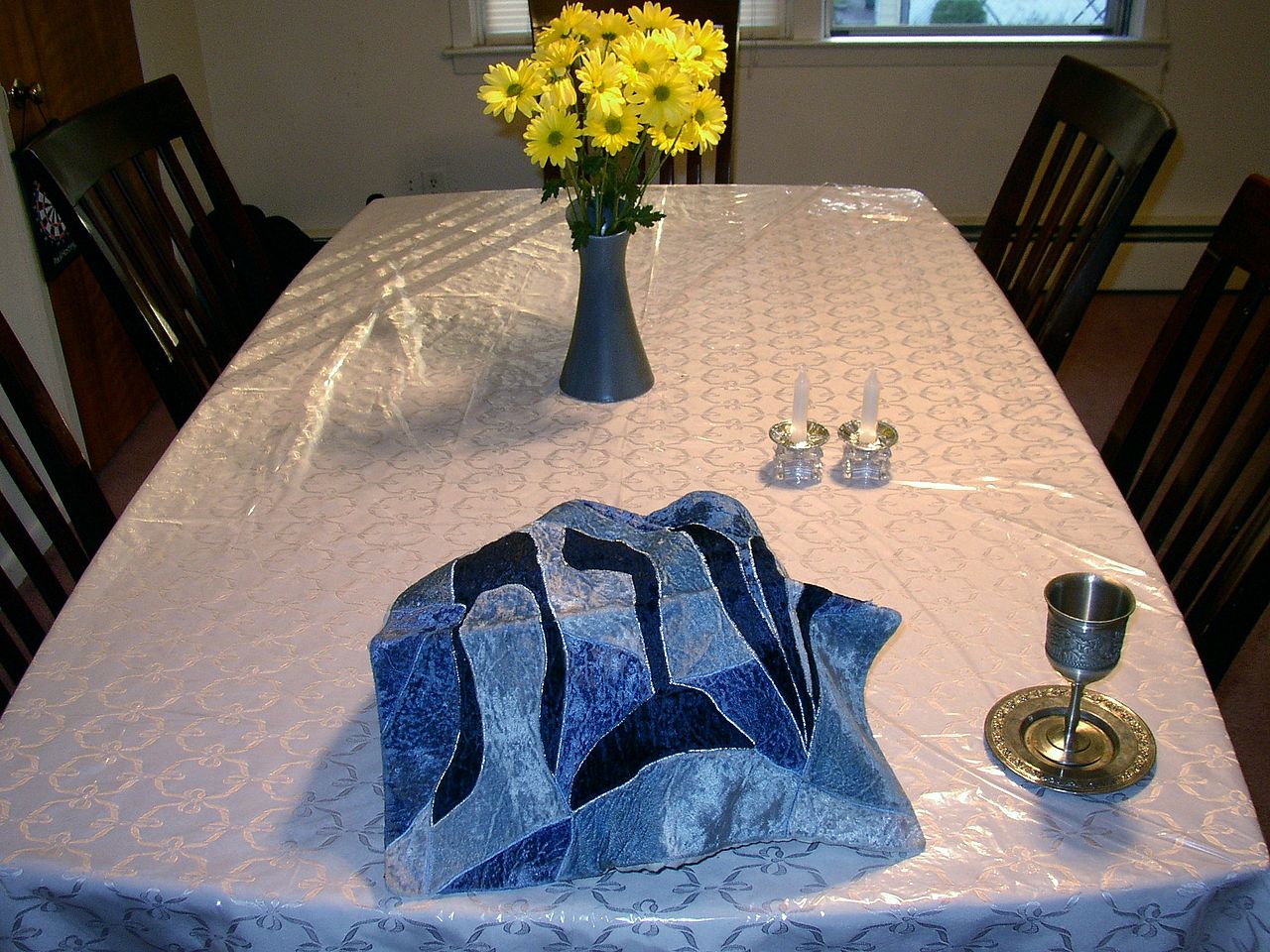
In Jewish tradition, the main blessing comes after the meal. Birkat Hamazon, Grace after Meals, is based on Deuteronomy 8:10: "And you shall eat and be satisfied, and bless." It has four blessings, and when people eat together, especially at Shabbat dinners and weddings, they often say it as a group.
Pangat · everyone at the same level · ਲੰਗਰ
Setting 4 · Thank by sitting as equals
The Sikh langar
Guru Nanak, the founder of Sikhism, started the langar, a free community kitchen where everyone eats together regardless of religion, caste, gender or status. People sit side by side in rows on the floor, called pangat. The third Guru, Guru Amar Das, made the rule "Pehle pangat, pichhe sangat": first eat together, then join the congregation. Even the emperor Akbar sat in the pangat before meeting him.
Guru Nanak's birthday, Guru Nanak Jayanti, falls on November 24 this year, two days before Thanksgiving.

Build your own table ritual
You can borrow the shape of these traditions without borrowing their sacred words. Here's a four-step ritual any family can use:
1 · Pause before · from Japan
Before anyone eats, everyone stops for ten seconds. One word of thanks, said together.
2 · Thank in order · from the Haudenosaunee
Go around the table. Each person thanks one specific thing: the person who cooked, the farmer, the rain, the cousin who drove three hours.
3 · Sit as equals · from the langar
Mix the seating. Kids next to grandparents. No one is "the kids' table." Serve the person next to you before yourself.
4 · Thank after · from Birkat Hamazon
When plates are empty and everyone is full, take one more minute. Name one thing from the meal you'll remember.
Printable card · fold and stand it on your table · download button at build
How our apps help

Ritual OS brings practices like these from real traditions, guided step by step, with the items each one uses shown before you begin. Before each practice, you confirm you'll respect the tradition it comes from, which is the same respect this guide asks of you.


Both apps are free in the iPhone beta.

TRY THE APP
THE CLEARING DISPATCH
One email. All of The Wired Ape.
New stories on family, ritual, the brain and belonging, plus news on Kithmark and Ritual OS. Free. Unsubscribe anytime.
Practitioner? Your letter lives on The Firekeepers page →


